Complete Guide to the Mardi Himal Trek
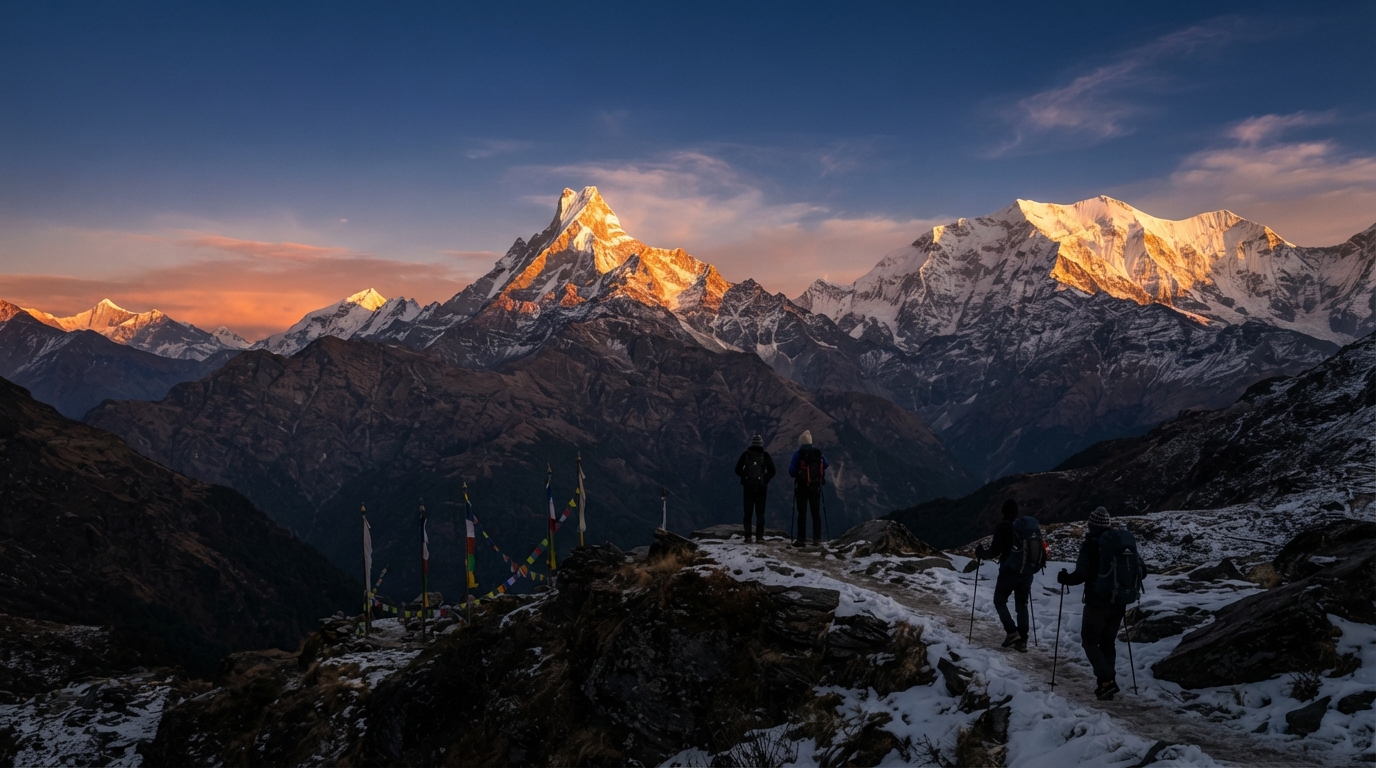
Tucked away in the shadow of its more famous neighbors, the Mardi Himal Trek has quietly become one of Nepal's most rewarding short treks. It sits in the Annapurna Region, offering close-up views of Machhapuchhre (Fishtail), Annapurna South, and Hiunchuli, without the long approach or crowds of the classic Annapurna routes. This guide covers everything you need to plan the trek: its setting, three itinerary options depending on how much time you have, permits, costs, packing tips, and answers to the questions trekkers ask most.
Why Trek to Mardi Himal?
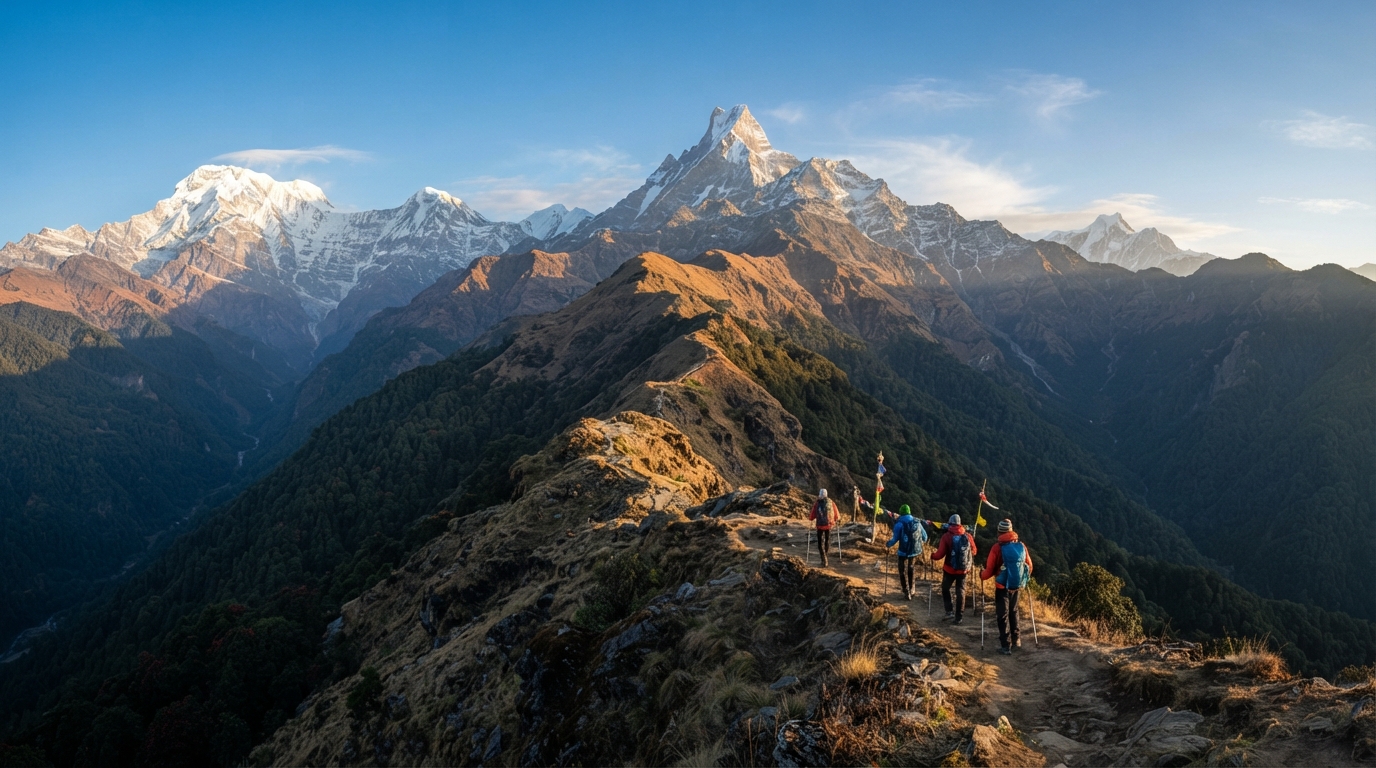
The Mardi Himal Trek has grown popular for good reason. It is short enough to fit into a one- or two-week holiday, yet it delivers views that rival much longer treks. The final stretch along the narrow ridge to High Camp and Base Camp puts Machhapuchhre almost within touching distance, with Annapurna I, Annapurna South, and Hiunchuli filling the skyline.
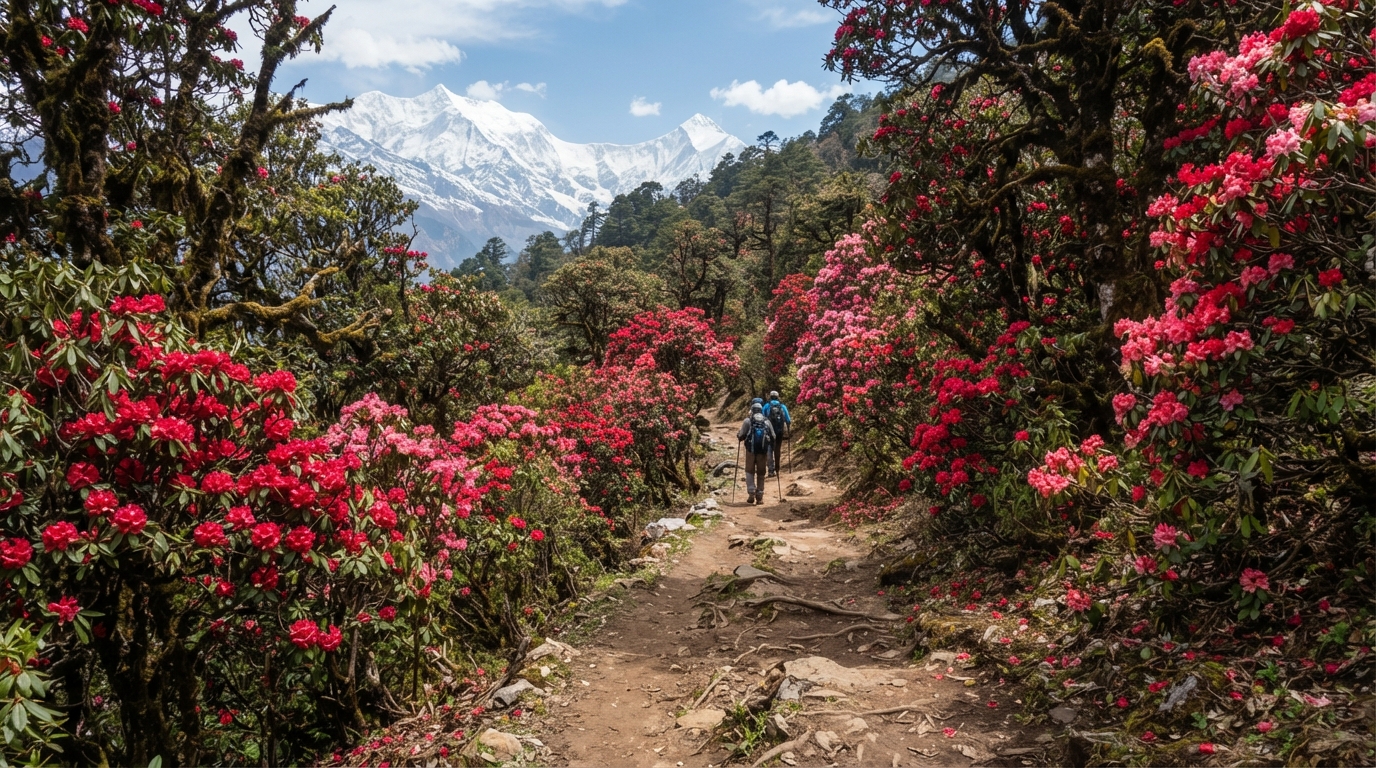
The trail also passes through rhododendron and oak forest that turns brilliant red and pink in spring, and the route sees far fewer trekkers than the Annapurna Base Camp or Annapurna Circuit trails, making it a good choice for anyone who wants a quieter, more intimate mountain experience.
Nepal is home to some of the world's most breathtaking and majestic peaks, making it an unparalleled playground for mountaineers, trekkers, and nature lovers. Nepal contains eight of the world's 14 highest peaks, including the tallest mountain in the world, Mount Everest. Other peaks in the Himalayan region include Kanchenjunga, Lhotse, Makalu, Dhaulagiri, Manaslu, Annapurna Massif, Langtang Range, Ganesh Himal, Island Peak, and many more. This mountainous country has not only attracted tourists from all over the world but also has paved a path for trekkers and adventure enthusiasts, and Mardi Himal remains one of the best entry points into that world for travelers with limited time.
Best Time to Trek Mardi Himal
Spring, running from March to May, brings warm days, blooming rhododendrons, and generally clear mountain views, making it the most popular season on the trail. Autumn, from September to November, is considered the best season overall thanks to stable weather, dry trails, and the clearest skies of the year.
Winter, from December to February, turns cold at High Camp and Base Camp, with a chance of snow, though the trail is quieter and views can still be excellent on clear days. Monsoon season, from June to August, brings wet, slippery trails and limited mountain visibility due to cloud cover, so it's generally best avoided unless you don't mind rain.
Trek Difficulty and Fitness
Mardi Himal is considered a moderate trek. There's no technical climbing involved, but the trail includes steep, sustained ascents, particularly between Forest Camp/Low Camp and High Camp, and the final push to Base Camp gains significant altitude in a short distance.
A reasonable level of fitness, a few weeks of preparation with walking or cardio training, and sensible pacing to allow for acclimatization are enough for most trekkers to complete it comfortably.

Permits Required
Two permits are required for the Mardi Himal Trek: the ACAP (Annapurna Conservation Area Permit), required since the trek falls within the Annapurna Conservation Area, and the TIMS Card (Trekkers' Information Management System), used to track trekkers for safety purposes.
Both permits can be arranged in Kathmandu or Pokhara, and most trekking agencies handle this as part of a package. If you'd like help understanding conservation area rules more broadly, see our guide to Nepal's conservation areas.
Mardi Himal Trek Itinerary Options
Mardi Himal can be trekked in a few different ways depending on how much time you have and whether you're starting the trip from Kathmandu or already in Pokhara. Below are three commonly used itineraries.
Itinerary Option 1: The Full 9-Day Itinerary (from Kathmandu)
This option is ideal for travelers arriving in Kathmandu who want the complete experience, including sightseeing transit days and buffer time at the start and end of the trip.
Day 1: Arrival in Kathmandu (1,400 m)
Day 2: Drive from Kathmandu (1,400 m) to Pokhara (822 m)
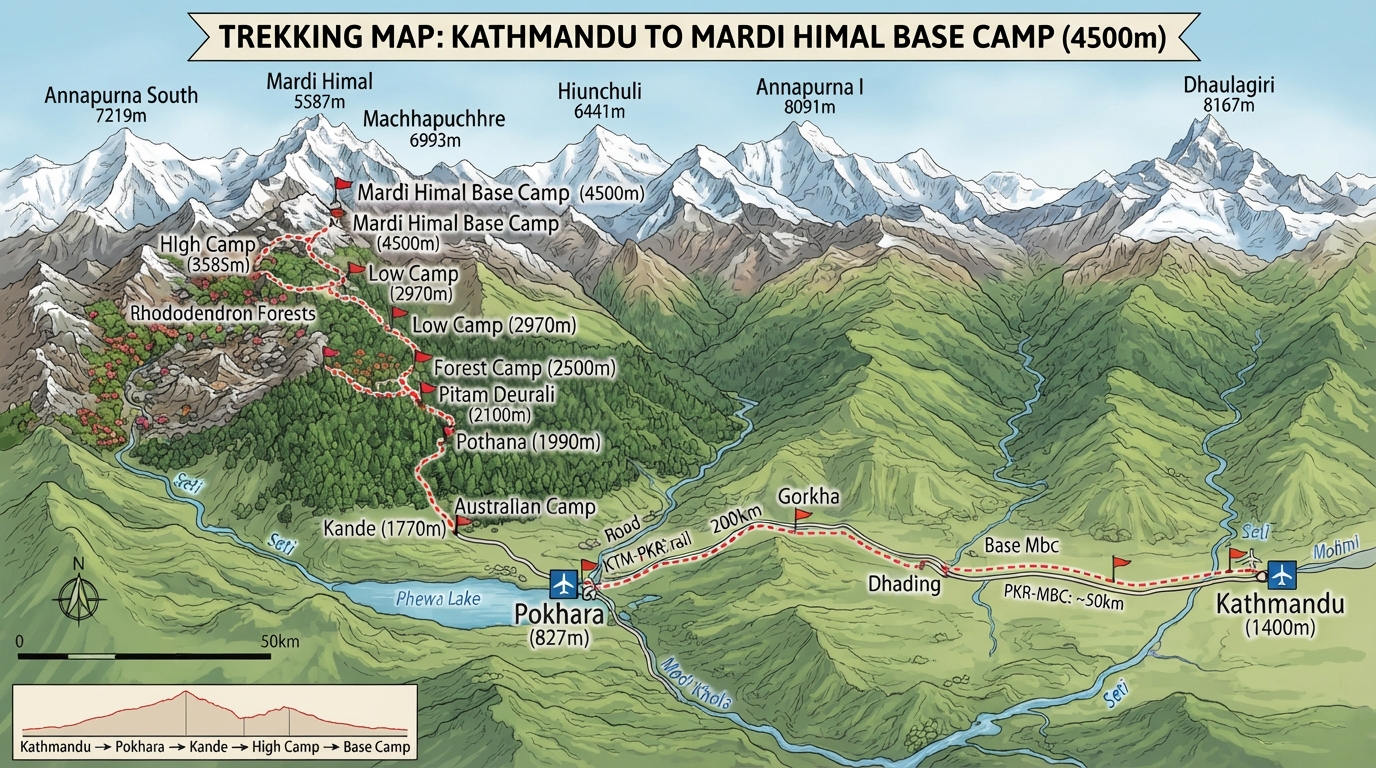
Day 3: Drive from Pokhara (822 m) to Kande (1,770 m) and Trek to Pitam Deurali (2,100 m)
Day 4: Trek from Pitam Deurali (2,100 m) to Forest Camp (2,600 m)
Day 5: Trek from Forest Camp (2,600 m) to High Camp (3,580 m)
Day 6: Early Morning Hike from High Camp (3,580 m) to Mardi Himal Base Camp (4,500 m) and Trek Back to High Camp (3,580 m)
Day 7: Trek from High Camp (3,580 m) to Siding Village (1,280 m) and Drive to Pokhara (822 m)
Day 8: Drive from Pokhara (822 m) to Kathmandu (1,400 m)
Day 9: Departure from Kathmandu (1,400 m)
Itinerary Option 2: The 5-Day Itinerary (starting/ending in Pokhara)
This is the most commonly booked version of the trek for those who are already in Pokhara or plan to arrange their own transport to and from Kathmandu.
Day 1: Drive from Pokhara (822 m) to Kande (1,770 m) and Trek to Pitam Deurali (2,150 m).
Day 2: Trek from Pitam Deurali (2,150 m) to Low Camp (2,970 m)
Day 3: Trek from Low Camp (2,970 m) to High Camp (3,580 m).
Day 4: Early Morning Hike from High Camp (3,580 m) to Mardi Himal Base Camp (4,500 m) and Trek Back to Low Camp (2,970 m)
Day 5: Trek from Low Camp (2,970 m) to Siding Village (1,750 m) and Drive to Pokhara (822 m)
Itinerary Option 3: The Fast 3-Day Itinerary
For trekkers with very limited time or those who want a quick, intensive push to Base Camp, this compressed itinerary covers the same essential highlights in three days. It requires strong fitness and good acclimatization tolerance, since altitude is gained quickly.
Day 1: Drive from Pokhara (822 m) to Kande (1,770 m) and Trek to Low Camp (2,970 m)
Day 2: Trek from Low Camp (2,970 m) to High Camp (3,580 m)
Day 3: Early Morning Hike from High Camp (3,580 m) to Mardi Himal Base Camp (4,500 m) and Trek Back to Siding (1,750 m) and Drive to Pokhara (822 m)Which Itinerary Should You Choose?
Choose the 9-day itinerary if this is your only trip to Nepal and you want Kathmandu sightseeing and transport built in. Choose the 5-day itinerary if you're already in Pokhara or arranging your own transport, and want a comfortable, well-acclimatized pace. Choose the 3-day itinerary only if you're short on time, are already acclimatized or confident in your fitness, and are comfortable with a faster ascent.
What to Pack for the Mardi Himal Trek
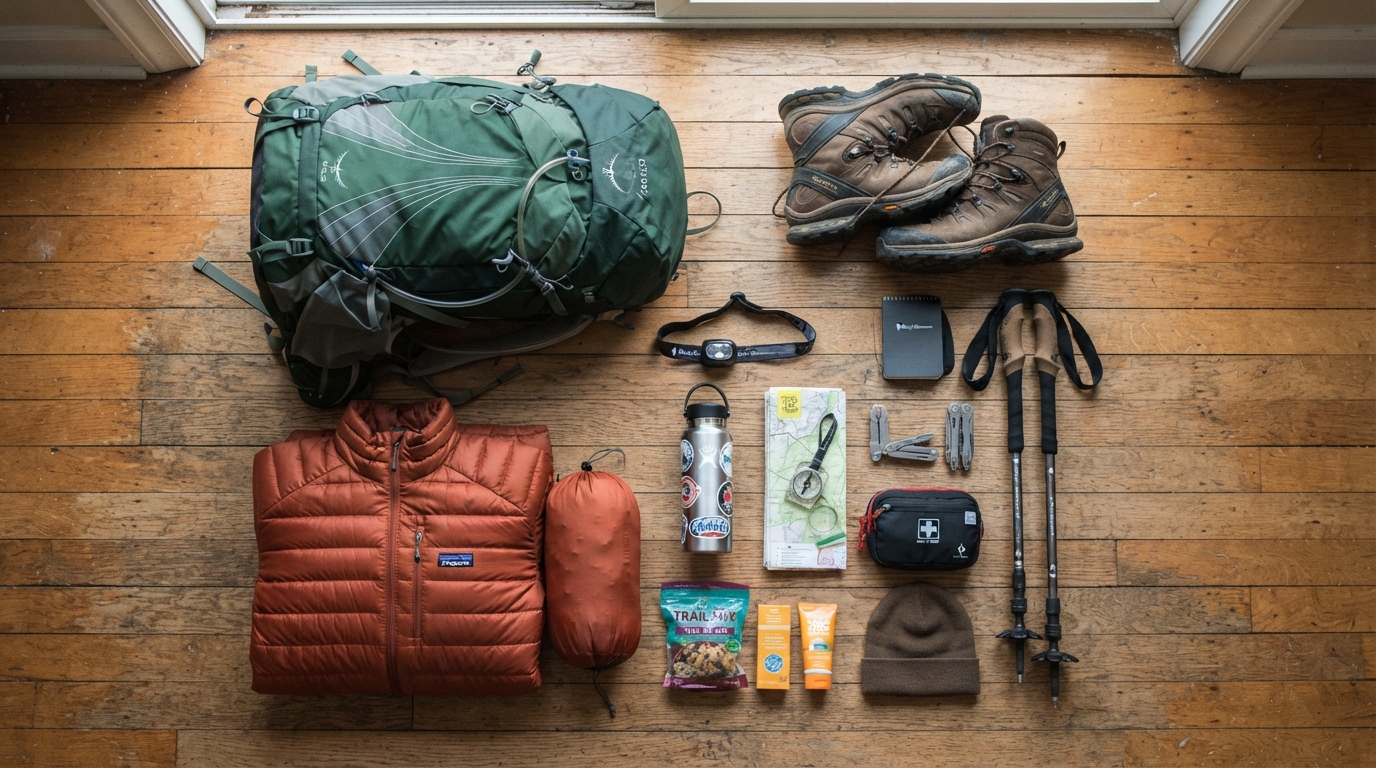
Layered clothing is the priority: base layers, a fleece or down jacket, and a waterproof outer shell will cover most conditions on the trail. Pair this with sturdy, broken-in trekking boots and a warm sleeping bag rated for sub-zero temperatures, since High Camp and Base Camp get cold even in spring and autumn.
Trekking poles help significantly on the steeper descents, and a headlamp is essential for the early morning hike to Base Camp. Round out your kit with sun protection (sunglasses, sunscreen, and a hat), a basic first-aid kit with any personal medication, water purification tablets or a filter, and a power bank, since charging is limited and often paid for at higher elevations.
Food and Accommodation on the Trail
Teahouses line the route from Pitam Deurali through Forest Camp, Low Camp, and High Camp, offering basic but comfortable rooms and hearty meals. Expect staple Nepali dishes like dal bhat, along with noodles, soup, and simple breakfast items.
Rooms are usually twin-share with shared bathrooms, and hot showers, wifi, and charging are often available for an extra fee the higher you climb.
Estimated Cost of the Trek
Costs vary depending on group size, season, and whether you book through an agency or trek independently with a guide/porter. Broadly, budget for permits (ACAP and TIMS), guide and/or porter fees if hired, teahouse accommodation and meals along the route, transport between Pokhara and Kande/Siding, and Kathmandu–Pokhara transport (flight or drive) if following the 9-day itinerary.
Working with a local trekking agency can simplify permits, transport, and guide arrangements, especially for first-time visitors to Nepal. You can compare typical trekking packages on our Annapurna region trekking packages page.
Final Thoughts
The Mardi Himal Trek packs a remarkable amount of Himalayan scenery into a relatively short trip. Whichever itinerary you choose, the reward is the same: standing on a narrow ridge with Machhapuchhre rising directly in front of you and the Annapurna range spread out on either side.
Plan around your available time, pack for cold nights at altitude, and take the ascent at a pace your body can handle, and Mardi Himal will deliver one of the most memorable short treks in Nepal.